



National Maternal Mental Health Hotline
Overview
At the time of development, the communities’ request was straightforward: stop telling them what not to do and start telling them what to do. Well aware of the mental health stigma in their communities, they wanted guidance that pointed to solutions that worked. By emphasizing that treatment is effective and help is available, COP-RCORP aligned with the 73% of respondents who indicated they would contact a suicide crisis hotline in a moment of need. To provide that clear, actionable next step, HRSA’s National Maternal Mental Health Hotline serves as the primary resource for inquiring about how to best support mothers.
Audience Assessments
A message is only effective if it reaches the right audience. With this in mind, each of the four communities performed an audience assessment to determine the best way to get a maternal mental health message out to both mothers and those around her. Below are each community’s findings:
Social Media Campaigns
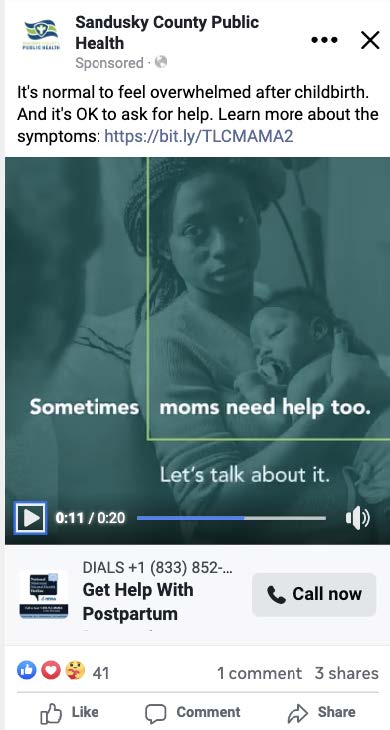
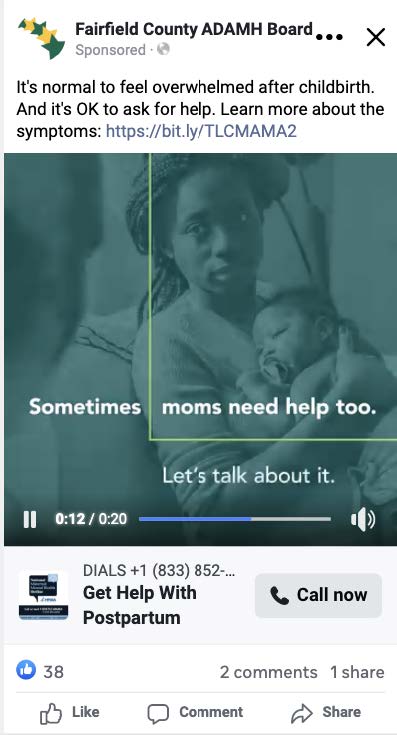
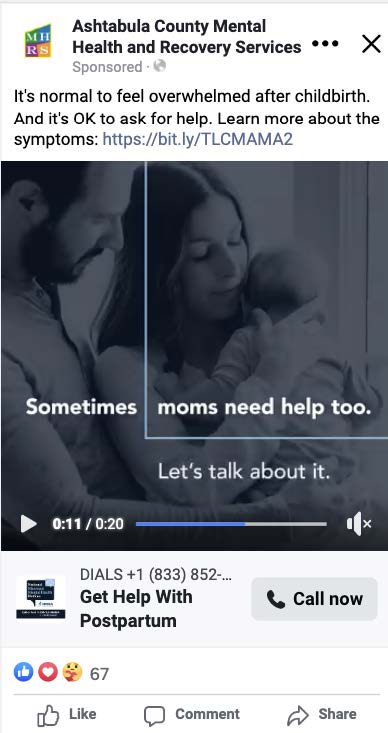
The audience assessment highlighted key areas of focus for each message. Click below to see the message delivered, platforms utilized, and community members reached in each campaign.
Phase 1A: Testing the Message
November 14, 2023 - February 29, 2024
76 calls placed
107 Campaign Days
~ 0.71 calls/day
Cumulative Overview
- Facebook and Instagram
- 1,216,174 Impressions
- 167,042 Users Reached
- Google and Youtube
- 3,132,446 Impressions
- Spotify
- 492,562 Impressions
Funded by GA133529 and GA133532
Phase 1B: Focusing on Mom
October 30 - December 14 2024
57 calls placed
45 Campaign Days
~ 1.72 calls/day
Cumulative Overview
- Facebook and Instagram
- 550,781 Impressions
- 73127 Users Reached
Funded by H7NRH42563‐01‐01
Mother’s Day Addendum: Focusing on those Closest to Mom
May 3 - May 11, 2025
21 Calls Placed
8 Campaign Days
~2.63 calls/day
Cumulative Overview
- Facebook and Instagram
- 71,360 Impressions
- 14,884 Users Reached
Funded by G28RH46290
Phase 2: Focusing on Partners and Conversations
May 12 - July 11, 2025
167 Calls Placed
60 Campaign Days
~2.78 calls/day
Cumulative Overview
- Facebook and Instagram
- 456,083 Impressions
- 49,053 Users Reached
- Google and Youtube
- 1,779,736 Impressions
- Spotify
- 303,726 Impressions
- 46,055 Users Reached
- Hulu
- 95,559 Impressions
Funded by G28RH46290
Phase 3: Focusing on Providers and Signs/Symptoms
To be continued
Funded by G28RH46290
Local Media Campaigns
Billboards


Radio
Total Reach:
- Fairfield County:
• 49,718 listeners - Ashtabula
• 55,200 listeners - Seneca and Sandusky
• 34,900 listeners
Community Branded Assets
Chip clip magnets and floral pins as mechanisms for community members to pick up hotline cards. The chip clips were chosen on the basis of audience knowledge, as Fairfield County noticed that chip clips were very popular at previous events. The pins were chosen to help mothers feel special on Mother’s Day, when traditional flowers were not an option.
Sherpa fleece blankets embroidered with the National Maternal Mental Health Hotline information.
Following the success of the floral pins on Mother’s Day, Fairfield distributed hotline information cards with winter holiday-themed pins during the winter holiday season. Seneca County distributed similar cards with holiday pins to their Project Noel families and local obstetric and labor and delivery departments.
First aid kits were identified as something most households could always use.
Branded wet wipes, because parents can never have too many on hand.
Milestone pamphlets for mothers. In addition to the education inside, the National Maternal Mental Health Hotline was stamped on the cover.
Branded cups with comparable capacity and durability to Stanley cups, as consortia noticed this style of cup was very popular in their communities.
“Tervis” style cups were also popular in the communities. Also depicted are National Maternal Mental Healthline cards and branded pens.
Branded shakers to align with their local WIC offices’ efforts to get mothers to drink more water.
A reusable tote bag.
A reusable, insulated grocery bag.
Tip: When coordinating consortia with separate budgets, leverage economies of scale to stretch funding. By identifying shared needs for branded assets, the consortia can place a single bulk order at a lower unit price and then distribute items across participating communities.